
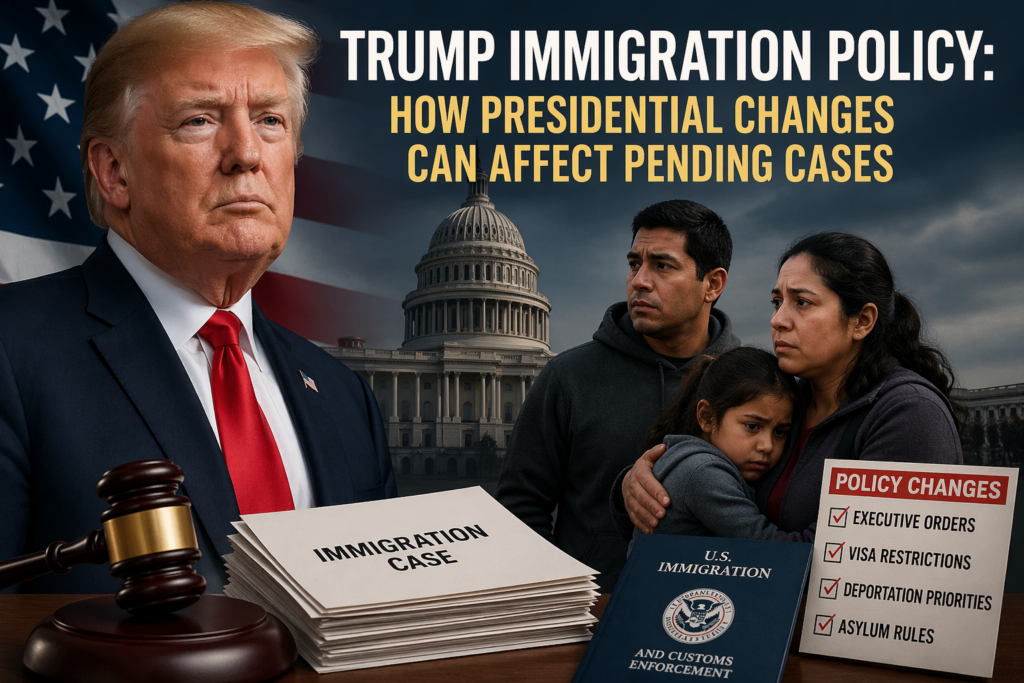
Introduction
Searches for “Trump immigration” surge whenever people expect major executive action, new enforcement priorities, or litigation affecting existing programs. The legal challenge is that presidential immigration policy is never just a matter of politics. It becomes actionable only when it is translated into specific agency conduct, prosecutorial priorities, regulations, or court-tested directives. For that reason, the right legal question is not whether a headline sounds dramatic, but how the announced change reaches a real case file.
How presidential policy reaches individual cases
Presidential influence usually operates through executive orders, interagency priorities, DHS memoranda, rulemaking, litigation positions, and public messaging that shapes agency implementation. Some changes affect border processing; others affect detention, parole, discretionary enforcement, or the adjudication culture within agencies. Yet even broad national statements may not alter the legal elements of relief such as asylum, cancellation, waivers, or adjustment eligibility. Lawyers therefore separate rhetoric from enforceable operational change.
What people usually misunderstand
A common mistake is assuming that every new administration wipes away prior rules instantly or that every announcement applies to all categories of immigrants. In reality, many systems remain controlled by statute, federal regulations, and court precedent. Some policy shifts expand discretion; others narrow it. Some create procedural obstacles rather than direct legal bars. Families should not panic or celebrate based only on branding. They should ask whether their case depends on discretion, on a fixed statute, on pending litigation, or on a program vulnerable to rapid change.
How to evaluate risk during policy transitions
The safest approach during major policy transitions is to review filing timing, travel plans, documentation quality, and exposure points such as interviews, ICE check-ins, criminal court events, or prior orders. Cases that rely heavily on discretion may deserve especially careful preparation because adjudicative culture can change even where statutory text does not. Policy-sensitive categories also require close monitoring of agency instructions and federal court developments.
Conclusion
Presidential immigration developments matter, but they must be translated into agency practice and case-specific strategy before they mean anything concrete. Sound legal advice focuses on implementation, timing, and procedural posture, not speculation. If your case involves filings with USCIS, removal proceedings in immigration court, detention concerns, or strategy questions affecting your family or business, get tailored legal advice before you act. Immigration outcomes often turn on timing, record-building, and choosing the correct forum at the correct moment.